The largest EIHA industrial hemp conference thus far – Mark Reinders elected as new president

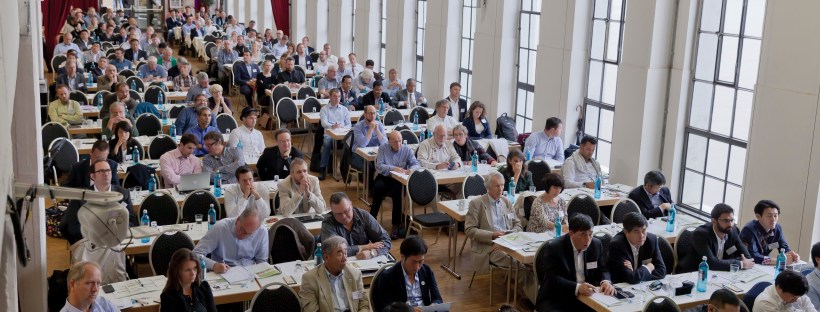
300 participants from 42 countries met last week in Wesseling near to Cologne, Germany for the latest data and developments, discussions, strategies and networking in the Hemp industry. Can industrial hemp reach 100,000 ha in Europe by 2030? Mark Reinders from the Dutch company HempFlax B.V. was elected as new president of the European Industrial Hemp Association (EIHA).

Production of hemp seeds increased from 2010 to 2013 by 92% and the production of flowers and leaves by an amazing 3,000%.
The cultivation areas of industrial hemp in Europe, investment in new processing lines and the demand for hemp products is continuously growing in Europe and worldwide. From the year 2011 to 2015 the cultivation area in the European Union more than tripled to 25,000 ha.

Hemp fibre is used for light-weight paper, insulation materials and biocomposites for the automotive industry. Hemp shivs, the woody core of the hemp plant, is a high-quality animal bedding material. Shivs are also used together with lime for walls and bricks in construction.

The strongest growth is in hemp food. The production of hemp seeds increased from 2010 to 2013 by 92% and the production of flowers and leaves by an amazing 3,000%.

There was a very inspiring and optimistic atmosphere at the conference, the main question was how we can expand the cultivation and processing to cover the growing demand.

Will it be possible to expand the cultivation areas from 25,000 ha last year to 100,000 ha by 2025 or 2030? How many jobs can the hemp industry create? How many GHG emissions could be avoided by substituting less environmentally friendly products? How fast will hemp food become a high volume mainstream product? How can CBD be regulated in a way that will help patients and nutrition-conscious people?

The day before the conference, the European Industrial Hemp Association (EIHA) organised full day meetings including the General Meeting of the association. After eleven years as president, John Hobson, GW Research, resigned as president and board member. All members thanked him for his excellent work. Mark Reinders from the Dutch company HempFlax B.V., a pioneering company in industrial hemp with cultivation and processing in The Netherlands and Romania, was elected as president with 86% of the votes. Sylvestre Bertucelli from InterChanvre, the French Industrial Hemp Association, became deputy president with 93% of the votes. Finally, Boris Baňas from Propaganda Production s.r.o. (Slovakia) was elected with 90% of the votes as new board member.

In current uncertain economic times, it was utterly refreshing to see the growth perspectives for the European Hemp industry.

EIHA Board Members:

Nova Institut

Fotoreportage

picture©: nova-Institut

Daniela Sfrija (CANAH International SRL (Romania)), Boris Banas (PROPAGANDA PRODUCTION s.r.o (Slovakia)), Mark Reinders (HempFlax B.V. (The Netherlands)), Daniel Kruse (Hempro Int. GmbH & Co. KG (Germany), Olivier Moreau (CAVAC BIOMATERIAUX (France)), Sylvestre Bertucceli (Interchanvre (France)), Bernd Frank (Planete Chanvre) (France) (v.l.n.r.)

More information: www.eiha-conference.org

Source: nova-institute, press release, 2016-06-09.


Happy hemping everyone!

file:///Users/Galathea/Downloads/googleab030d16ad5e6e88.html

Größte EIHA Nutzhanf Konferenz aller Zeiten – Mark Reinders neuer Präsident

300 Teilnehmer aus 42 Ländern trafen sich Anfang Juni in Wesseling bei Köln zum Austausch der neuesten Daten und Entwicklungen, Diskussionen, Strategien und Netzwerken der weltweiten Hanfindustrie. Kann Nutzhanf in Europa bis 2030 eine Anbaufläche von 100.000 ha erreichen? Mark Reinders von der holländischen Firma HempFlax B.V. wurde zum neuen Präsidenten der “European Industrial Hemp Association (EIHA)” gewählt.

Produktion von Hanfnüssen von 2010 bis 2013 um 92%, Produktion von Blüten und Blättern sogar um 3.000% gestiegen

Die Anbauflächen von Nutzhanf in Europa, die Investitionen, und die Nachfrage nach Hanfprodukten wachsen in Europa und weltweit kontinuierlich an. Zwischen den Jahren 2011 und 2015 haben sich die Anbauflächen für Hanf in der Europäischen Union verdreifacht.

Hanflebensmitteln sehen das größte Wachstum. Die Produktion von Hanfnüssen stieg von 2010 bis 2013 um 92%, die Produktion von Blüten und Blättern sogar um unglaubliche 3.000%.

Auf der Konferenz war eine inspirierte und optimistische Atmosphäre zu spüren und die wichtigste Frage war, wie kann man den Anbau und die Verarbeitung von Hanf ausbauen, um die wachsende Nachfrage zu befriedigen?

Wird es gelingen, die Anbaufläche von 25.000 ha im letzten Jahr auf 100.000 ha im Jahr 2025 oder 2030 anzuheben? Wie viele neue Arbeitsplätze würden dabei entstehen? Wie viele Treibhausgas-Emissionen könnten durch die Substitution weniger umweltfreundlicher Produkte eingespart werden? Wie schnell werden Hanflebensmittel großvolumige Mainstream-Lebensmittel werden? Wie kann der Zugang zu CBD geregelt werden, so dass Patienten ihre Medizin bekommen, aber auch gesundheitsbewusste Menschen CBD-haltige Produkte zu sich nehmen können?

Einen Tag vor der Konferenz organisierte die “European Industrial Hemp Association (EIHA)“ einen ganzen Tag mit Sitzungen, darunter auch die Vollversammlung des Vereins. Nach elf Jahren Präsidentschaft legte John Hobson, GW Research, sein Amt als Präsident und Vorstandsmitglied nieder. Die Mitglieder bedankten sich bei John Hobson für seine exzellente Arbeit. Mark Reinders vom holländischen Unternehmen HempFlax B.V., ein Pionierunternehmen für Anbau und Verarbeitung von Hanf in den Niederlanden und Rumänien, wurde mit 86% der Stimmen zum neuen Präsidenten gewählt. Sylvestre Bertucelli von InterChanvre, dem französischen Industriehanfverband, wurde mit 93% der Stimmen zum Stellvertreter gewählt. Und schließlich wurde Boris Baňas von Propaganda Production s.r.o. (Slovakia) mit 90% de Stimmen zum neuen Vorstandsmitglied gewählt.

In unsicheren ökonomischen Zeiten ist es sehr bestärkend, die Wachstumsperspektiven der europäischen Hanfindustrie vor Augen geführt zu bekommen.

EIHA Vorstandsmitglieder:

Nova Institut

Fotoreportage

picture©: nova-Institut

Daniela Sfrija (CANAH International SRL (Romania)), Boris Banas (PROPAGANDA PRODUCTION s.r.o (Slovakia)), Mark Reinders (HempFlax B.V. (The Netherlands)), Daniel Kruse (Hempro Int. GmbH & Co. KG (Germany)), Olivier Moreau (CAVAC BIOMATERIAUX (France)), Sylvestre Bertucceli (Interchanvre (France)), Bernd Frank (Planete Chanvre (France)) (v.l.n.r.)

Mehr Informationen zum Thema: www.eiha-conference.org

Source: nova-Institut, Pressemitteilung, 2016-06-09.


Happy hemping everyone!

drugfree cannabis plant

Hanfdämmung – Hanf als Dämmstoff

Aus den Fasern und dem Stroh der ältesten Kulturpflanze der Menschheit macht der  Farbenhersteller Caparol eine kompakte Dämmplatte für die Fassade, die sich angenehm warm anfühlt. Drückt man sie zusammen, stellt sie sich von selbst in die Ausgangsposition zurück. Ein wegweisender Beitrag zur “Re-Naturierung” der Fassade.

Hanffaser-Dämmplatten sind pure Natur am Haus. Schon auf dem Feld entzieht die Pflanze der Atmosphäre deutlich mehr Kohlendioxid, als im Zuge ihres Anbaus, der Ernte, der Verarbeitung und auf dem Transportweg freigesetzt werden. Das wirkt sich umso positiver aus, als Hanf unglaublich schnell und praktisch von allein nachwächst: Jeden Tag schießt die Kulturpflanze bis zu vier Zentimeter in die Höhe. Dabei wirft sie so viel Schatten, dass Unkraut um sie herum keine Chance hat. Der Effekt: Landwirte, die Hanf für Caparol anbauen, können auf Bodendünger und Pflanzenschutzchemie komplett verzichten. Die Ökobilanz des Bio-Nutzhanfs, der bis zu 1,50 m tief im Erdreich wurzelt und ganz nebenbei auch die Bodenfruchtbarkeit verbessert, fällt daher vorbildlich aus. Natürlicher geht’s nicht!

Wohngesundheit fühlen
Nichts kratzt auf der Haut, wenn man das neue Hanfprodukt berührt. Keine mineralischen Stäube, wenn man mit bloßer Hand über die leicht gewaffelte Oberfläche der Caparol-Hanf-Dämmplatte streicht. Generell löst Hanf keine Allergien aus. Der Einsatz im und am Haus ist gesundheitlich vollkommen unbedenklich. Ein beruhigendes Gefühl zu wissen, dass man damit sowohl dem Klima als auch sich selbst und seinen Lieben etwas Gutes tut.

Gesünder dämmen und leben
Überhaupt lässt sich das ganze Haus mit Hanfprodukten dämmen. An der Fassade schützen sie 1a vor Kälte sowie Hitze. Schallübertragung von der Straße in die Wohnung wird wirksam unterbunden. Im hanfgedämmten Haus herrscht rund um die Uhr ein gesundes, ausgeglichenes, ausgesprochen angenehmes Raumklima. Das kommt daher, dass Hanffasern von Natur aus offenporig sind. Feuchte aus der Raumluft nehmen sie in sich auf, leiten sie in trockenere Bereiche weiter und geben sie dort wieder ab. Wie eine Klimaautomatik, die keinen Strom verbraucht und dennoch ohne Unterbrechung funktioniert.

Hanf dämmt grüner – ein natürlicher Beitrag zur Baukultur
Als erster deutscher Anbieter hat Caparol die Genehmigung erhalten, Fassaden älterer Häuser mit einem Hanffaser-Dämmsystem auf Vordermann zu bringen. “Die Capatect Natur+ Fassadendämmung verfügt über eine Europäisch Technische Zulassung (ETZ) sowie das CE-Zeichen und ist ab sofort verfügbar. Damit läutet Caparol eine neue Ära mit ökologischen Bauprodukten ein. Wer mit Hanf dämmt, gewinnt mehrfach: Das Wohlbefinden und die Wohngesundheit werden erhöht, die Umwelt geschont und die Energiekosten gesenkt.

Quellink.

Weitere Informationen:
Caparol Hanfdämmung


Sign the Medical Cannabis Declaration (MCD)


The Declaration of Human Rights for Medical Access to Cannabis and Cannabinoids states the following:

“According to the Universal Declaration of Human Rights adopted by the  United Nations in 1948:

“Everyone has the right to life, liberty and security of person”  (Article 3).

“Everyone has the right to a standard of living adequate for the  health and well-being of himself and of his family, including food,  clothing, housing and medical care and necessary social services, and  the right to security in the event of unemployment, sickness,  disability, widowhood, old age or other lack of livelihood in  circumstances beyond his control” (Article 25, Paragraph 1).

Whereas this Declaration applies to everyone and all people, whereas  many doctors are banned by legal requirements from treating their  patients with cannabis-based medicines and whereas many people cannot  afford access to cannabis-based drugs we thus declare that:

1. Every medical doctor has the right to treat his or her patients with cannabinoids and cannabis products according to the rules of  good medical care.
2. Every patient has the right to access cannabis and cannabinoids for medical treatment supervised by a medical doctor, regardless of  social status, standard of living or financial means.”


The MCD is already signed by nearly 4.700 people.


Sign the Medical Cannabis Declaration here.


Happy hemping everyone!


Hemp clothing in Hamburg – Marlowe Nature

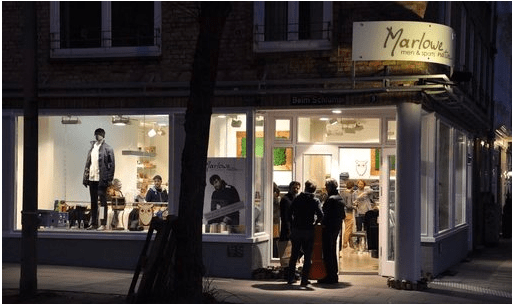
Marlowe Nature in Hamburg Eimsbüttel (Beim Schlump 9) now also stores fashionable and ecologically friendly hemp mens wear.

Happy hemping everyone!

Hanfkleidung in Hamburg – Marlowe Nature

Marlowe Nature in Hamburg Eimsbüttel (Beim Schlump 9) führt nun auch umweltbewusste Hanfkleidung für Männer, wie fashionmag.com berichtet.

Ich freue mich über das neue Hanfkleidungsangebot in Hamburg!
Happy hemping everyone!

Hemp car – Bruce Dietzen

US American Bruce Dietzen built a car from Hemp inspired by Henry Ford.

Dietzen used a Mazd-Chassis as a base and additionally 100 pounds of hemp.

Hemp is much less prone to dents as he demonstrates in the video, when hitting the bonnet with his fist, there are no marks no nothing left.

His aim is to show and prove to everyone that we can use plants as a natural resource for anything we need to produce.

Costs for the test model are about 200.000 USD. Anyone keen to invest or learn more can contact his company Renew Sports Cars.

I am so please to see hemp advocates all over the world putting so much enthusiams and effort into showing the world all the great uses and benefits of the hemp plant.

Happy Hemping everyone!


Hanf Auto – Bruce Dietzen

Der Amerikaner Bruce Dietzen baut sich ein eigenes Auto aus Hanf. Seine Inspiration dazu war Henry Ford.

Bruce nutzte einen Mazda-Chassis als Basis und mit Hilfe von 100 Pfund Hanf und Harz wurde das Hanf Auto dann fertiggestellt.

Das Hanfmaterial ist viel resistenter und bekommt weniger leicht Beulen und Dellen als Stahl, wie in dem Video demonstriert wird wenn Bruce mit voler Wucht auf die Motorhaube haut und keinerlei Dellen zurückbleiben.

Bruce möchte mit seinem Hanf Auto zeigen, dass wir alles was wir brauchen aus Pflanzen herstellen können.

Die Kosten dür das Testmodell belaufen sich auf ca. 200.ooo USD. Interessenten werden gebeten, direkt mit Renew Kontakt aufzunehmen.

Ich freue mich immer wieder zu sehen, mit welchem Enthusiasmus Hanf Advokaten Zeit und Geld investieren um Hanf als Ressource für alle möglichen Produkte voranzubringen.

Happy Hemping everyone!


drugfree cannabis plant

Hemp and the pharmaceutical industry – and in the middle the EU

Big companies rule the the EU through lobbyism, as I can tell from own experience.

I have discovered through research that the cannabis plant, especially industrial hemp is also food and contains an extensive amount of nutrients, for instance all essential proteins and omega fatty acids.
Until now, the carriers of these valuable nutrients, namely the leaves and leafy blossoms have been wasted and simply left on the field during retting.
It was already common knowledge that industrial hemp also contains valuable health ingredients, the cannabinoids – yet never seen as food.

The pharmaceutical industry has an eye on these valuable cannabinoids and wants to make sure they are classified as a pharmaceutical and not as a freely available plant ingredient.

The pharmaceutical lobby soon began to spread the message that cannabis was a dangerous drug which if anything could only be turned into something positive and useful by the pharmaceutical industry.

Politicians who were not able to distinguish between high THC levels in marijuana and low levels of THC in industrial hemp soon began to pass everything that contained any THC whatsoever over to pharmaceutical companies.

This is how the whole legalization fight emerged – it is once again simply a matter of profit for the big pharma players.

Nobody even considered making the valuable nutrients in industrial hemp available to humans.

Only my invention brought about this idea that hemp is food. My invention is to press raw hemp juice which contains ALL healthy naturally occurring ingredients of the hemp plant to be consumed by humans.

Since the juice production also yields press remnants which contain the hard to digest fibers of the plant, nutritious cattle feed would also be an additional value created when producing the juice.

I got this invention patented in order to ensure the pharmaceutical industry would not get a hold of this new discovery and could therefore not restrict the wider general public from access to this healthy nutrition.

As a member of the European Industrial Hemp Association I sadly have to witness with many other enthusiastic hemp advocates that the the pharmaceutical industry is currently working hard on Brussels to restrict the free access and right to process industrial hemp as a food.
Their aim is to exclusively handle Cannabinoids and use it in medicine. Therefore, they are trying to get single cannabinoids patented and now claim everything that contains these patented cannabinoids, such as CBD or THC, cannot be categorised as food but as a pharmaceutical.

This claim is equally grotesque as claiming lemons could only be used as medicine due to the vitamin C they contain or tomatoes are medicine because of the glutamate they contain.

Tomatoes contain within their matrix of natural ingredients a substance called glutamic acid or glutamate, a common neurotransmitter. However, this does not make a tomato a medicinal product, or a pharmaceutical prescription drug or subject to governmental permission. Glutamate, since it was discovered in tomatoes, did not even make it a novel food. The level of glutamic acid in tomatoes is not monitored either.

It looks like bureaucrats in Brussels do not invest enough time into gathering information, hence they simply rely on information provided by the pharma lobby itself.

We would be better off if every country within the EU would decide for itself. Specialized politicians, under democratic control, would then debate a EU wide solution.

A result of this would be a more transparent process as opposed to the current process in Brussels. In which big corporations and their lobbyists are breathing down EU bureaurats necks in order to dictate that except for hemp seeds nothing else of the hemp plant shall be food for general consumption. This happens far off from any direct nation-state supervision or monitoring.

drugfree cannabis plant

Hanf und die Pharmaindustrie – mittendrin die EU

Ich kann aus eigener Erfahrung bestätigen, dass die großen Konzerne die EU “regieren”.
Mein Fall: ich habe durch Forschung herausgefunden, dass die Pflanze Cannabis bzw. der drogenfreie Hanf als Lebensmittel sehr viele wichtige Nährstoffe enthält. z.B. alle Proteine.
Bisher waren die Träger dieser wertvollen Inhaltsstoffe, die Blätter und oberen Blütenstände auf dem Feld geblieben – verschwendet. Es war schon bekannt, dass auch im drogenfreien Hanf außerdem sehr wertvolle Gesundheitsstoffe sind, die Cannabinoide – jedoch nicht als Lebensmittel.

Die Pharmaindustrie hatte bereits ihre Hände darauf gelegt und wollte Cannabinoide nicht frei zugänglich den Menschen überlassen. Ihre Lobby Maschinerie setzte bald in die Welt, Cannabis, das sei eine gefährliche Droge, aus der allenfalls die Pharmaindustrie etwas Gutes machen könne.
Die Politiker, die den Unterschied zwischen hohen THC Gehalten im Cannabis und niedrigen THC Gehalten im Hanf nicht zu unterscheiden wußten, fingen plötzlich an, alles, was THC enthält der Pharmaindustrie zu überlassen. Deshalb der ganze Legalisierungskampf, es geht mal wieder ums Geld für die Großkonzerne.

Niemand kümmerte sich darum, die Nährstoffe aus dem Industriehanf (im Gegensatz zum High produzierenden Cannabis) für den Menschen zugänglich zu machen. Erst meine Erfindung machte das möglich. Aus dem Hanf den Saft zu pressen, in dem ALLE Inhaltsstoffe die Nahrung und auch die anderen gesunden Stoffe enthalten ist.
Als Pressreste mit den schwerverdaulichen Ballaststoffen blieb auch für die Kühe etwas Nahrhaftes übrig.

Diese Erfindung ließ ich patentieren, ich wollte sie auf keinen Fall der Pharmaindustrie überlassen. Ich bin Mitglied der EIHA, der Europäischen Industrie-Hanf Association. Zusammen mit anderen, die den Nährwert des Hanfes unter die Menschen bringen wollen, müssen wir feststellen, dass in Brüssel die Pharmaindustrie dabei ist, uns den freien Zugang zur Nahrungs-Verwertung von Industrie-Hanf zu verbauen. Nur sie will die Cannabinoide zu Medizin verarbeiten können.

Die Pharmaindustrie will ein einzelnes Cannabinoid patentieren lassen und behauptet nun, überall wo dieses Cannabinoid drin sei, handele es sich nicht um Nahrung, sondern um Medizin.Das ist genauso schwachsinnig wie zu behaupten, die Zitronen dürften nur noch zu Medizin verarbeitet werden, weil sie Vitamin C enthalten, oder die Tomaten seien Medizin, weil sie Glutamat enthalten.

Doch die Brüsseler Bürokraten scheinen es zu verpassen sich schlau zu machen und verlassen sich nur allzu gerne auf die Einflüsterungen der Pharmalobby. Das wäre so gar nicht möglich, wenn wir in jedem Land einzeln die Bestimmungen machten. Die Fachpolitiker aus allen Ländern können sich ja dann miteinander eine gemeinsame Europäische Lösung überlegen.
Das wäre transparenter als der undemokratische Brüsseler Apparat, in dem fernab jeder direkten Länderkontrolle die Einflussnahme der Lobbyisten blüht, weil nur die Großkonzerne den EU Markt bestimmen wollen und ihn somit einfach kaufen.